Beneath the hotel, around a preserved section of the city wall, Brașov’s story is told through maps, objects, photographs and contemporary creations.
01 · Historia
Eight centuries in one place.
From the first fortifications to today’s hotel: the chronology documented in the Goldsmiths’ Mini Museum.
1203
Brașov begins to take shape
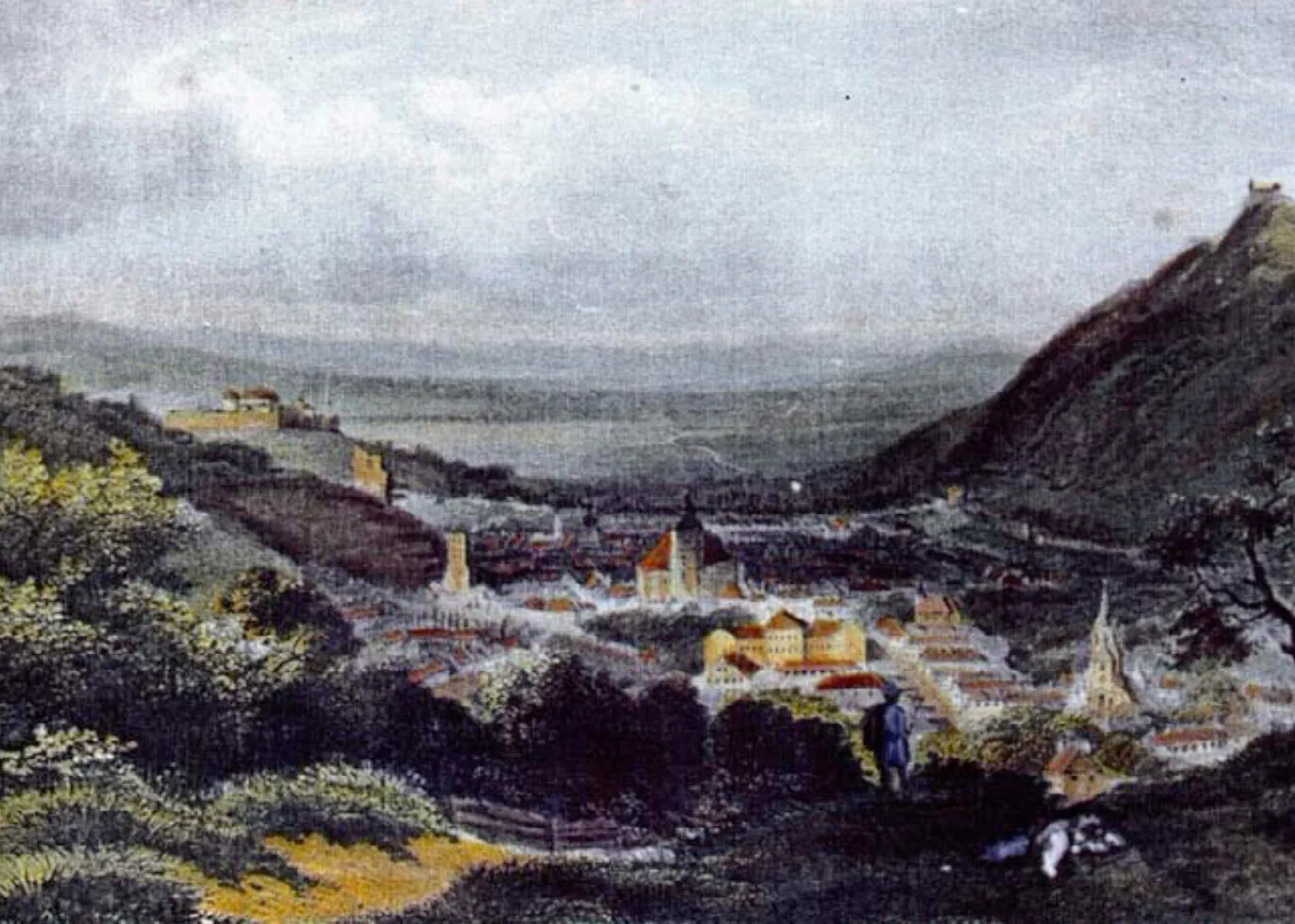
The city grew around a fortress placed strategically above the settlement, followed by defensive walls. Medieval Brașov comprised the Citadel and the Șchei, Brașovechi and Blumăna suburbs. The Teutonic Knights contributed to its foundation from 1211; Transylvanian Saxons were settled later, and Brașov became one of Transylvania’s seven fortified cities. Archaeology records far older Neolithic cultures and Dacian traces in the area.
Brașov citadel viewed from the south-west, drawing by L. Rohbock, engraving by I. Popel.1235
Corona, the city of the crown
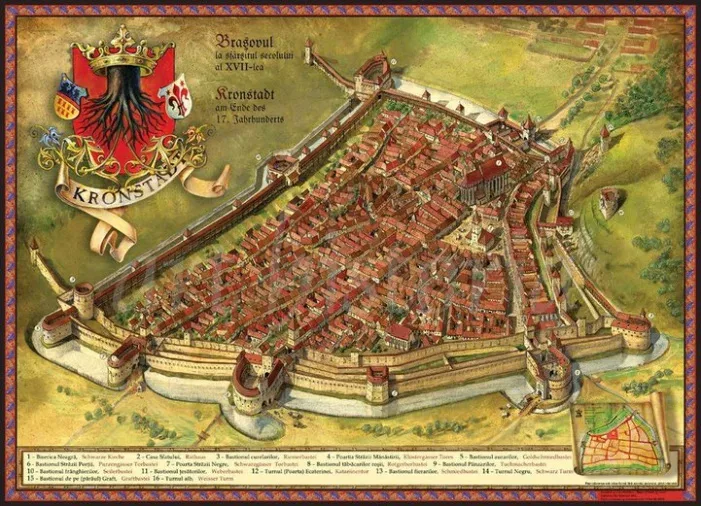
The town appears as Corona in 1235, later Barasu and Brasu. Its 1353 coat of arms showed a crown with fleurons and a lily; a tree trunk joined it in 1429. Today’s arms retain a golden crown and 13 roots for the communities of Țara Bârsei. Legend says King Solomon hid his crown in a tree while escaping the Cumans—giving rise to Kronstadt, “City of the Crown”.
Historic map of Brașov, Museum of History.1427
The citadel is complete
Walls and defence towers enclosed the town. Entry was through Catherine’s Gate, Customs or Monastery Gate, the Coppersmiths’ Main Gate and Black Street Gate. Four outer watchtowers guarded it; the White and Black Towers survive. Inside, the terrain produced the dense pattern of adjoining houses still associated with the old town.
1511
The Goldsmiths’ Guild is recorded
Brașov’s privileged trading position encouraged craftsmen to organise in guilds. Goldsmiths and silversmiths are documented in the sixteenth century, while the Council Square market drew traders from Transylvania, Wallachia and Moldavia. The guild produced liturgical pieces, jewellery, dress accessories and domestic objects for patrons throughout the region.
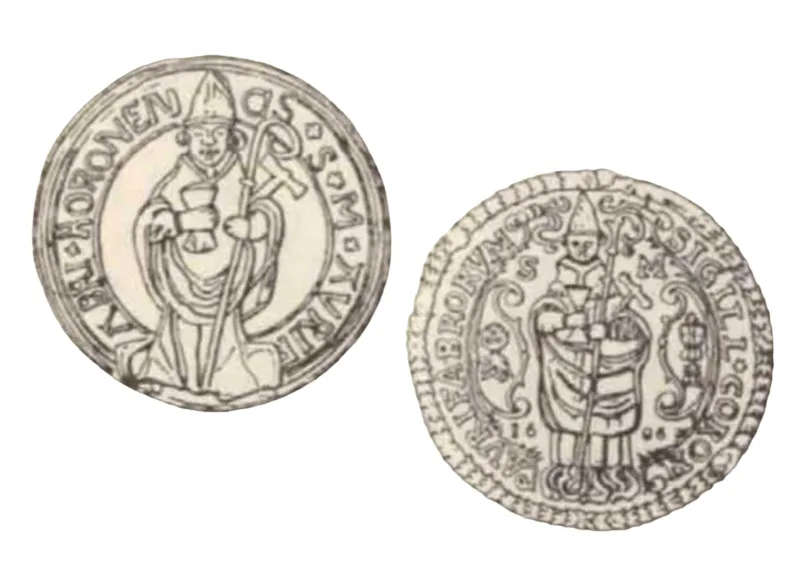
Seal of the goldsmiths, created during the guild’s reorganisation.1556
The Goldsmiths’ Tablet is certified
Guild work combined Renaissance and Baroque styles with local and Brâncovenesc influences. Its seal represented Saint Martin of Tours, protector of the goldsmiths and patron of one of the city’s oldest churches. The craftsmen’s prosperity extended into the citadel’s public, diplomatic and military life.
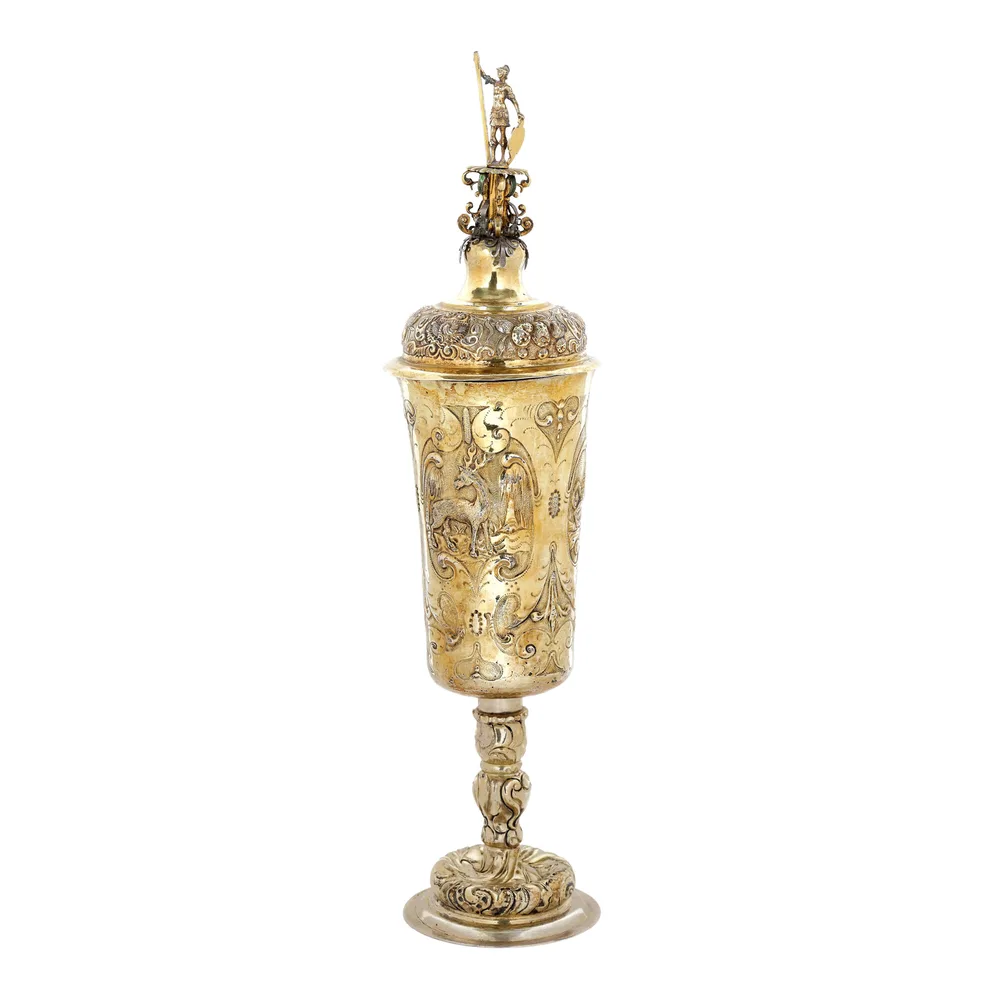
Transylvanian gilt-silver cup by Paulus Roth, c. 1680.1639–1641
The Goldsmiths’ Bastion is built
An irregular hexagonal bastion rose along the northern wall between Gate Street and Monastery Gate. Its façade bore Brașov’s arms and the names of magistrates Christian Hirscher and Michael Goldschmidt. Demolished in 1886, it made way for the State Higher Real School, now part of Transilvania University. In the era’s symbolism stone and iron meant strength, while gold and silver evoked spirit, subtlety and mastery.
17th–19th c.
Objects made by the goldsmiths
Works in gold, silver and gilt silver carried geometric, vegetal and animal ornament, biblical scenes and landscapes. Cups were chased or hammered with medallions and moving animals. Vines, peonies, tulips and motifs of Byzantine and Eastern origin entered the Brâncovenesc style alongside hunting scenes and local nature.
1896
Schuller Villa is built
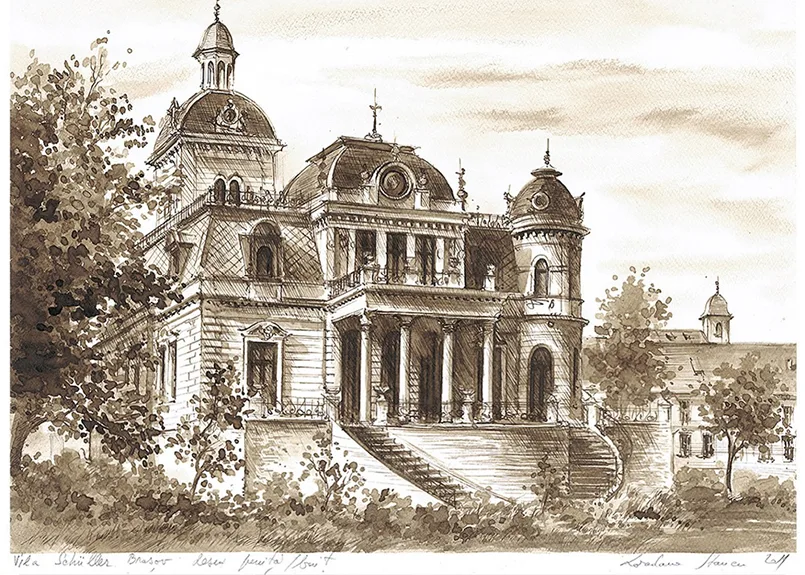
Pharmacist Friedrich Schuller erected one of the period’s tallest civic buildings opposite the central park, looking toward Mount Tâmpa and the Black Church. It combined Renaissance, Baroque, Neoclassical and Gothic Revival details. The Romanian Telephone Company later bought part of the site and built the Telephone Palace; the villa was demolished for its extension in 1962.
Schuller Villa, 2011 photograph by Loredana Stancu.1947–1989
Brașov under communism
In 1950 Brașov was renamed Stalin City, Council Square became 23 August Square and the central park received a propagandistic name. Industrialisation brought factories and workers’ districts. The 1987 workers’ revolt became a significant act of resistance against Nicolae Ceaușescu’s regime.
2022
Radisson Blu Aurum opens
The hotel brings the memory of this place into the present. In its rooms, portraits of symbolic dresses and reinterpreted jewellery reference the goldsmiths’ work; corridors feature historic Brașov buildings. On the lower level, the Goldsmiths’ Mini Museum documents the story around a preserved section of the city wall.
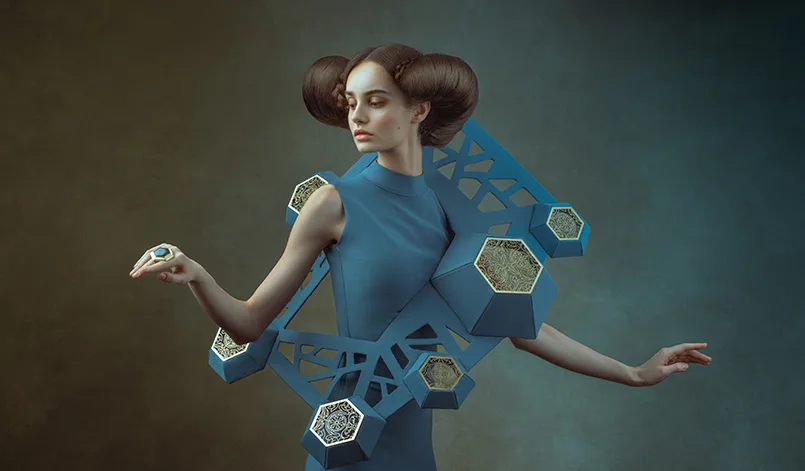
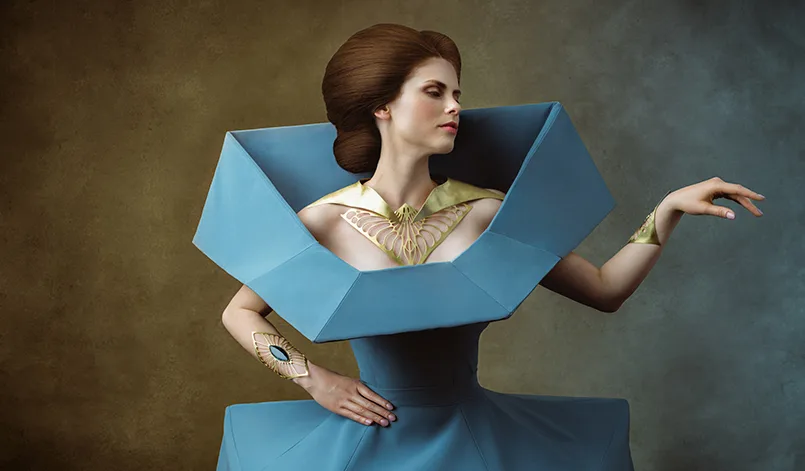
The Sapphire dress from the #Aurum collection.
02 · #Aurum
The #Aurum dresses
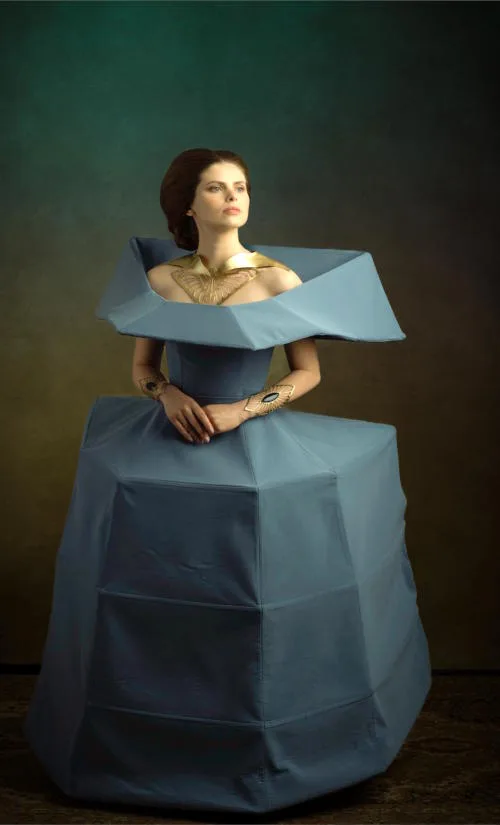
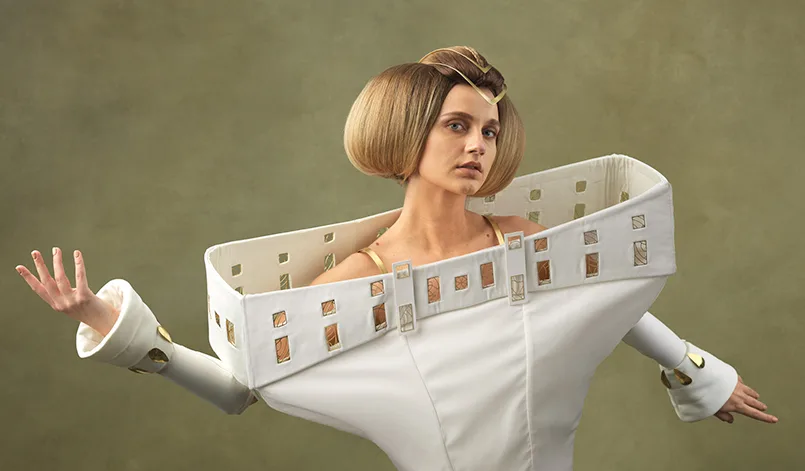
The symbolic dresses and reinterpreted jewellery draw on the forms, techniques and decorative motifs of Brașov’s goldsmiths. Displayed in rooms and public spaces, they translate historic craft into a contemporary language.
Aurum IAurum IIAurum IIISapphire
The Goldsmiths’ Mini Museum is on the hotel’s lower level, beside the preserved medieval wall.